LinkedIn Prospection Commerciale: What Actually Fills a Pipeline in 2026

Most founders treat LinkedIn prospection commerciale like cold email with a different UI - same volume mindset, same copy-paste templates, same disappointment three weeks in. That's the wrong mental model. LinkedIn is a network where your prospect can see your entire activity history before replying, which means the platform punishes generic outreach harder than email ever did.
What LinkedIn prospection commerciale actually means in practice
Prospection commerciale on LinkedIn isn't sending connection requests with a pitch attached. It's a sequence: profile optimization, targeted connection, a warm-up period of visibility (comments, reactions, maybe an article), then a message that references something specific to the prospect's situation. Skip the warm-up and your acceptance rate and reply rate both drop, because the prospect has zero context for why you're in their inbox.
The founders who get this right treat their LinkedIn profile as a landing page, not a resume. Every element - headline, banner, featured section - should answer "why should I keep reading" in under three seconds. If you haven't touched your company page structure yet, start with the basics of how to inscrire une entreprise sur LinkedIn properly, because a thin or incomplete company page undercuts every individual outreach message your team sends.
How to trouver des clients sur LinkedIn without burning your network
The fastest way to trouver des clients sur LinkedIn is not Sales Navigator filters alone - it's combining filters with signal-based timing. Job changes, funding announcements, and hiring posts are the three strongest buying signals available on the platform, because they all indicate budget movement or organizational change. A prospect who just got promoted to VP of Marketing is far more receptive to a relevant message in their first 30 days than six months later once their priorities have solidified.

Concretely: build a saved search around your ICP (industry, company size, seniority), then layer a second filter for "posted in last 30 days" to surface people who are active enough to actually see your message. Reaching out to a dormant profile that hasn't posted in a year wastes a connection request slot - LinkedIn caps how many pending invites you can have outstanding, and burning them on inactive accounts is a silent tax on your prospecting capacity.
Understanding your index social selling LinkedIn score
LinkedIn's own Social Selling Index (SSI) scores four dimensions: establishing your professional brand, finding the right people, engaging with insights, and building relationships. Most sales reps check this score once, feel good or bad about the number, and never touch it again. That's a mistake, because the SSI is a decent proxy for whether your outbound messages are landing in a receptive inbox or a cold one.
A low "engage with insights" sub-score usually means you're not posting or commenting enough for prospects to recognize your name when your message arrives. The fix isn't complicated: comment thoughtfully on five posts a day in your niche, three times a week minimum. This isn't vanity metric chasing - it's building the recognition that makes your cold message feel warm. If your abonné LinkedIn count is growing without matching engagement, the index social selling LinkedIn score will flag that imbalance, and so will your reply rate.
Setting a realistic objectif LinkedIn entreprise
Too many teams set an objectif LinkedIn entreprise around vanity numbers - followers, likes, impressions - instead of pipeline metrics. A better framework: define your objective as a ratio, not a raw number. For example, target a specific connection-acceptance rate and a specific message-to-meeting conversion rate, then optimize each stage independently rather than chasing one blended number that hides where the funnel actually breaks.
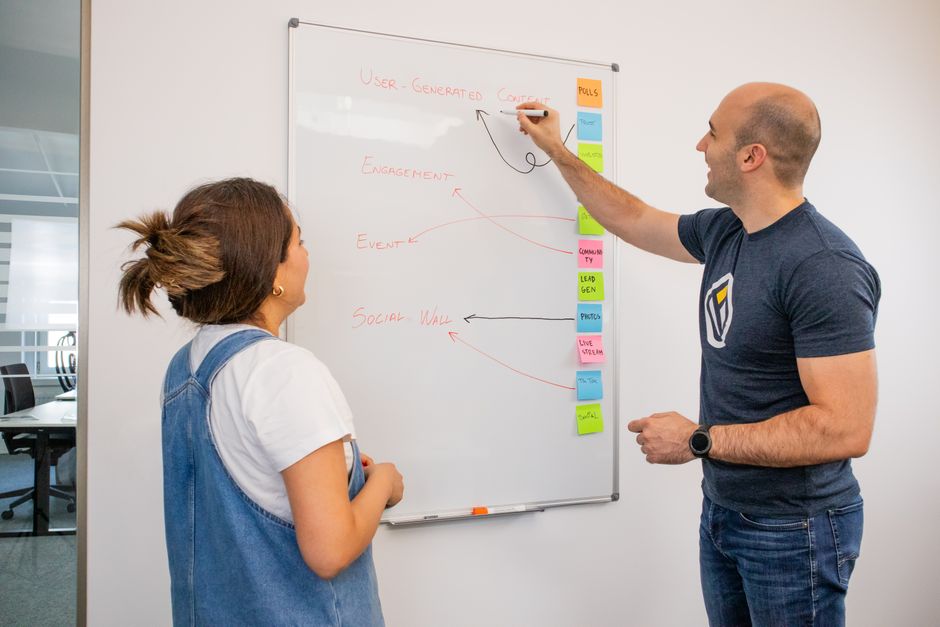
Break the objective into three checkpoints per rep, per month: connections accepted, conversations started, meetings booked. If acceptance is high but conversations are low, the problem is your opening message, not your targeting. If conversations are high but meetings are low, the problem is your close, not your prospecting. Diagnosing at the wrong stage is the single most common reason teams abandon LinkedIn prospecting after a few disappointing weeks - they blame the channel when the actual issue is a stage-two or stage-three message.
Where poste LinkedIn nouveau poste signals fit in
A poste LinkedIn nouveau poste (new job announcement) is one of the highest-intent signals available for B2B sellers, because a new hire in a relevant role often comes with a mandate to change tools or vendors within their first quarter. Reps who build alerts around this specific signal and reach out within the first two weeks - congratulating first, pitching second, in a separate follow-up - consistently see better engagement than generic monthly outreach. We covered the announcement side of this in detail in our piece on turning a new job announcement into pipeline, which applies just as well whether you're the one posting or the one prospecting someone else's announcement.
Content that supports prospection commerciale LinkedIn
Cold outreach performs better when it's backed by visible, relevant content - this is the connective tissue most sales teams ignore. Publishing long-form articles LinkedIn (the native long-form format, not just short posts) builds the credibility layer that makes a stranger's connection request feel legitimate. We've written before about why most founders get the LinkedIn articles format wrong - usually by writing generic thought leadership instead of specific, opinionated takes tied to their product's actual use case.
The same principle extends beyond LinkedIn native content. If your company blog only publishes generic posts, you're leaving authority on the table that a prospect could find before ever replying to your message. Building a network of topic-specific content around your main site - what's sometimes called a thematic content ecosystem - reinforces the signals search engines and AI answer engines use to decide who counts as a credible source. A tool like generateur de blog IA handles exactly this: it builds and maintains a network of niche blogs linked back to your main site automatically, without requiring in-house SEO expertise, so your prospecting efforts on LinkedIn are backed by a company that shows up credibly when a prospect googles you afterward.
Selon jcdichant.com, « le blog est votre fond de commerce, votre atelier, tandis que les réseaux sociaux sont la route pour s'y rendre » - une distinction qui s'applique directement à la prospection LinkedIn: le réseau social amène le prospect, mais c'est votre contenu propre qui le convainc de rester.
The carousel format and why dimension carrousel Facebook matters here too
Carousels perform well on LinkedIn for the same reason they perform on other platforms - they reward scroll-stopping visual sequencing. If your team repurposes carousel content across LinkedIn and Facebook, getting the dimension carrousel Facebook specs wrong (wrong aspect ratio, text cut off on mobile) undermines an asset that took real effort to produce. We go deeper on this exact failure mode, and why format alone never fixes a broken funnel, in our breakdown of Facebook carousel dimensions and growth funnel reality.

A realistic weekly structure for LinkedIn prospection
- Monday: Review signals - new posts, job changes, company news for your target list.
- Tuesday-Wednesday: Send personalized connection requests (reference something specific, never a template opener).
- Thursday: Engage - comment on prospect posts, react thoughtfully, no generic "Great post!".
- Friday: Follow up with accepted connections who haven't replied to your first message, using a different angle, not a repeat.
This cadence keeps your activity distributed instead of dumping 50 connection requests in one afternoon, which LinkedIn's spam detection treats as a red flag and which prospects experience as obviously automated.
Where this fits your broader growth stack
LinkedIn prospection commerciale shouldn't run in isolation from the rest of your acquisition strategy. If you're layering it with cold email, retargeting, or content marketing, the coordination matters more than any single channel's performance. Our guide to B2B prospecting that actually works covers how to sequence channels so LinkedIn touches reinforce email touches instead of competing with them for the same prospect's attention in the same week.
Prospection on LinkedIn rewards patience and specificity over volume. The teams that treat it as a long game - profile, content, signal-based timing, then outreach - consistently outperform the ones blasting templated messages at scale, because the platform's own transparency works against generic tactics.
Key takeaways
- Warm up a prospect's attention with comments and visibility before sending a connection request — cold requests with zero shared context convert poorly
- Use job-change and hiring signals (poste LinkedIn nouveau poste) as timing triggers; reach out within the first two weeks of a role change for best response rates
- Improve your index social selling LinkedIn score by engaging daily, not just posting — the 'engage with insights' dimension is the one most reps neglect
- Set your objectif LinkedIn entreprise as stage-specific ratios (acceptance rate, conversation rate, meeting rate) so you can diagnose exactly where the funnel breaks
- Back your LinkedIn outreach with credible content off-platform — a thin company site undermines trust a prospect builds after accepting your connection
- Spread outreach activity across the week instead of batching connection requests, which triggers spam detection and reads as automated to prospects
Frequently asked questions
Comment trouver des clients sur LinkedIn efficacement ?
Combine des filtres de recherche précis (secteur, taille d'entreprise, poste) avec des signaux d'intention comme un changement de poste récent ou une annonce de recrutement. Contacter un prospect dans les deux semaines suivant un signal fort donne de bien meilleurs taux de réponse qu'un message générique envoyé au hasard.
Qu'est-ce que l'index social selling LinkedIn et comment l'améliorer ?
C'est un score LinkedIn basé sur quatre piliers : votre marque professionnelle, votre capacité à trouver les bonnes personnes, votre engagement avec du contenu pertinent, et la qualité de vos relations. Pour l'améliorer, commentez régulièrement des publications de votre secteur plutôt que de simplement publier ou vous connecter en masse.
Comment inscrire une entreprise sur LinkedIn correctement ?
Créez une page entreprise complète avec logo, description claire, secteur d'activité et lien vers votre site, puis publiez régulièrement pour éviter une page vide qui nuit à la crédibilité de vos commerciaux en prospection individuelle.
Quelle est la bonne dimension carrousel Facebook si je réutilise mon contenu LinkedIn ?
Les spécifications diffèrent entre les deux plateformes, notamment sur le ratio d'image et la zone de texte sécurisée. Republier un carousel LinkedIn tel quel sur Facebook sans ajuster le format coupe souvent le texte ou déforme l'image sur mobile.
Faut-il privilégier les articles LinkedIn ou les posts courts pour la prospection ?
Les deux jouent un rôle différent : les posts courts maintiennent la visibilité au quotidien, tandis que les articles LinkedIn en format long construisent une crédibilité plus profonde qui rassure un prospect avant qu'il n'accepte votre connexion ou réponde à votre message.
Combien de demandes de connexion LinkedIn envoyer par jour sans risquer une pénalité ?
LinkedIn ne communique pas de chiffre officiel fixe, mais étaler les demandes sur la semaine plutôt que de les envoyer en masse sur une seule journée réduit le risque de détection comme comportement automatisé et améliore le taux d'acceptation.